Home battery storage for London electricity demand.
A battery holds the surplus your panels produce while you are out and releases it when the household is busiest. Solar and battery work is zero-rated for VAT until 31 March 2027.
Free to ask with nothing to sign. Finance for qualifying homes.
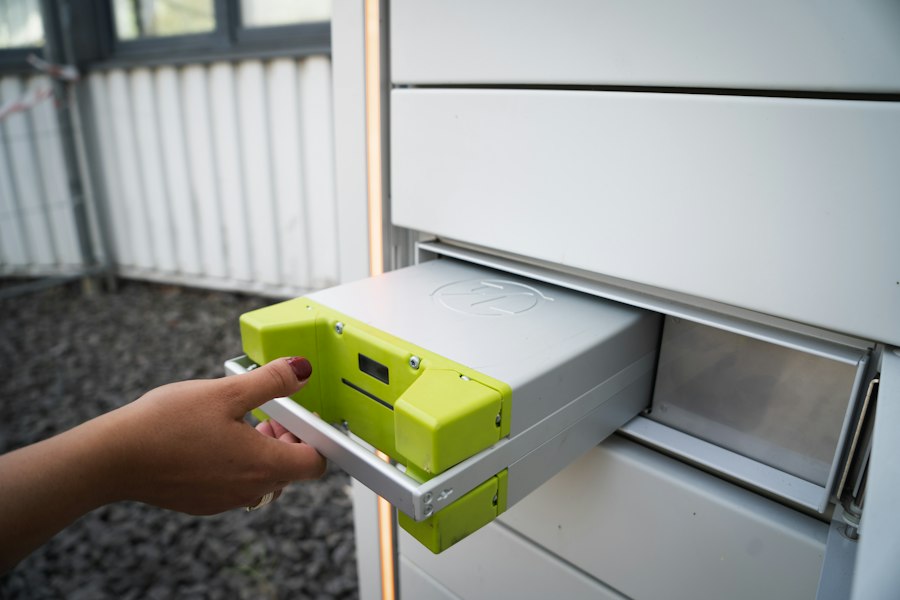 A home battery unit
Demand that follows the working week.
A London household might leave at eight and return at six, or work from home on Tuesdays and Thursdays. The panels produce through the middle of the day regardless. A battery stores what the house does not use then, and gives it back for the evening.
Without one, the surplus is exported at a low rate and the same electricity is bought back later at full price.
Capacity follows the household.
Two London homes with batteries show the range: 3.3kWh in Hornsey, on a flat roof with 10 panels, and 5kWh in Lewisham, with 17 panels. Each matches how that household uses power.
A household home all day draws differently from one out until evening, so sizing begins with your week and not a stock capacity.
How the right size is worked out.
Your week
Who is home on which days, and when the heavy appliances run.
Panel output
The size of the array limits how much surplus there is to store.
Tariff
Export and time-of-use rates shift which size pays back soonest.
Space
A unit that fits the garage, cupboard or wall available to you.
Where it goes, and what a power cut does.
A London terrace usually has less spare room than a detached house. Garages, under-stair cupboards and utility spaces are typical, and some units are rated for an outside wall, with the position confirmed at survey. Duracell, Fox ESS and Growatt are among the brands available.
Most batteries shut down when the grid fails unless the system is set up for backup. If that matters, say so early and the design will state what is included.
The same battery, paid for different ways.
After the roof and battery are agreed, you see the price next to the finance on offer: monthly plans, short 0% offers on certain products, and any qualifying route needing nothing upfront. A battery can be added to the finance for a new solar system, or priced alone when it goes onto panels already in place.
Finance is subject to status, affordability and lender approval. The installation team behind London Solar acts as a credit broker, not a lender. Asking about payment options is not a finance application and will not touch your credit file.
What Londoners ask about batteries.
What does a battery do if I work from home some days?
On those days the house uses more of its own generation directly, so less reaches the battery. On the days you are out, it fills. Sizing looks at the whole week, so you are not paying for capacity you will not use.
Can I add one to panels already on my roof?
Usually. Depending on your inverter, we connect a battery directly, or fit an AC-coupled model beside an older string inverter. We check first.
Is there room for it in a terrace?
Generally, yes, in a garage, cupboard or on an outside wall, though space is tighter than in a detached house. We settle the spot at survey.
Does a battery work in a power cut?
Not by default. A battery works during an outage only if the system was built for backup, so tell us at the start if that is a requirement.
How the battery fits with the rest.
Solar Panels
What fills the battery each day. See solar installation in London →
EV Charging
Stored energy for a charge at night. Check EV charger options →
Find out which battery suits your week
Tell us when the house is busy and whether solar is already on the roof. That is enough to start sizing storage.
Free, and no obligation to proceed. Asking about payment options is not a finance application and leaves your credit file alone.
It costs nothing to send and ties you to nothing. We might ask about your working pattern before a battery is sized.